RESULTS
Measured against the twelve months after go-live.
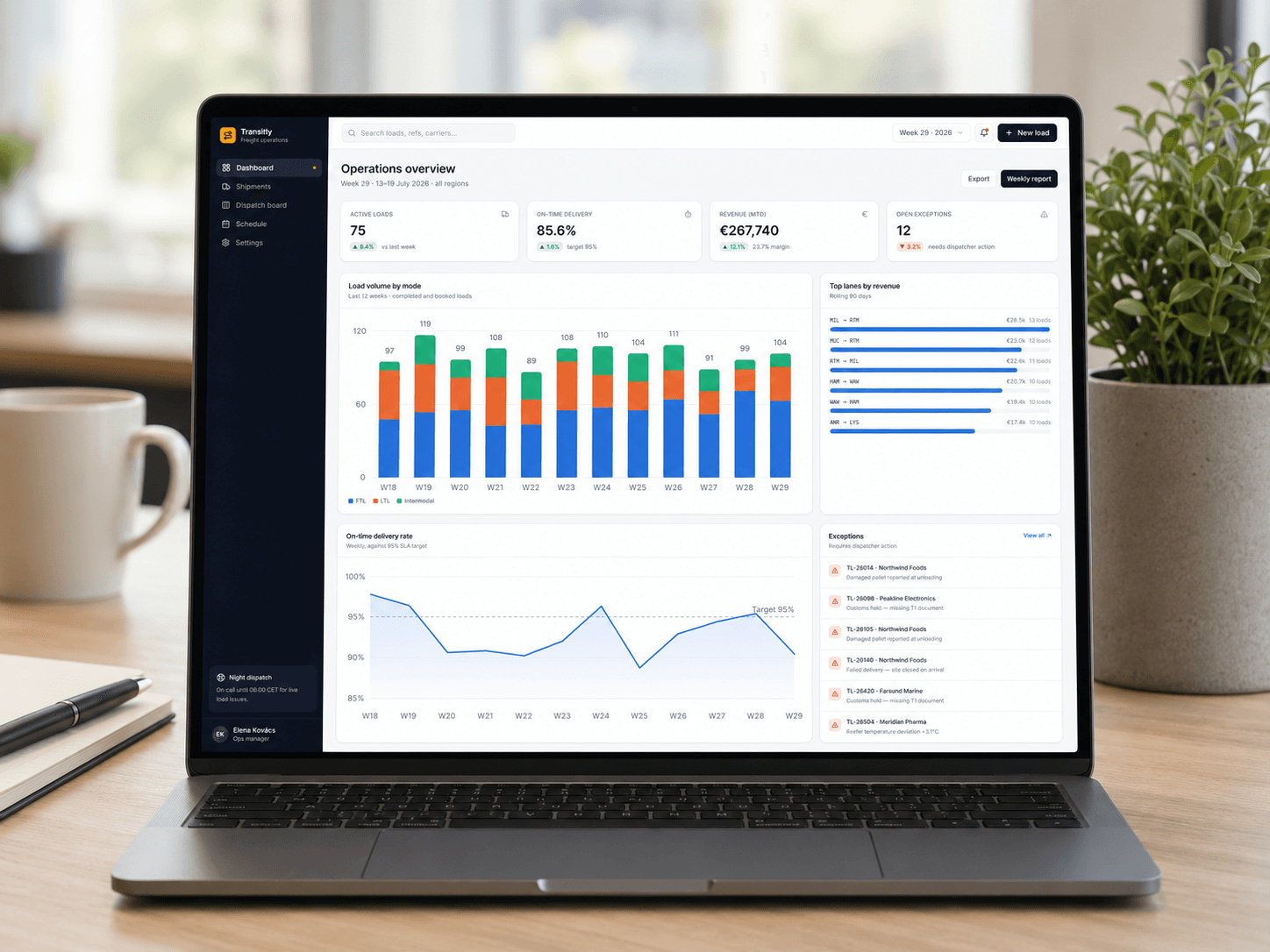
On-time delivery: 87% → 96%
Within two quarters the operation moved from below its 95% customer promise to consistently above it — the difference between apologising to customers and renewing them.
Planning a load: 22 min → 6 min
Roughly four hours of desk work handed back to every dispatcher, every day.
Fixing a problem: 9 h → 2 h
A customs hold or a failed delivery now surfaces the moment it happens — not at the end of the day, when the customer has already called.
64% more volume, same six people
Twelve months of growth absorbed without a single new hire — capacity that would otherwise have meant four more dispatchers.
The problem
Nothing was wrong with the team. The operation had outgrown the tools running it.
Planning lived in spreadsheets
Every load was assigned by hand, in a file only two people fully understood, with no view of who was already committed.
Problems surfaced at the end of the day
A customs hold at 09:00 was often discovered at 17:00 — by which point the delivery was late and the customer had already called.
The promise was slipping
On-time delivery sat at 87% against a 95% commitment. Close enough to look survivable, far enough to cost renewals.
What we shipped
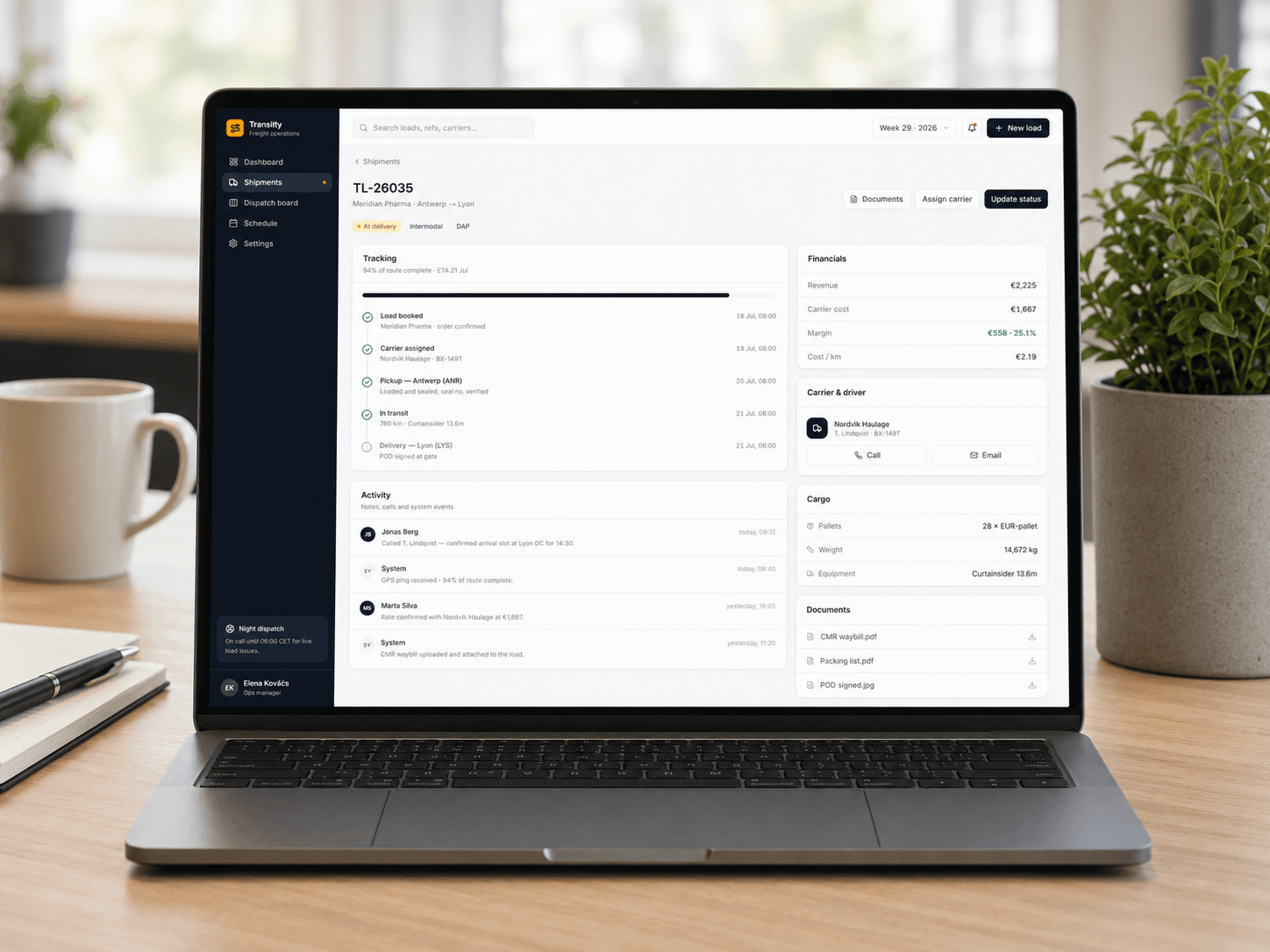
One operations platform, replacing the spreadsheets rather than sitting beside them.
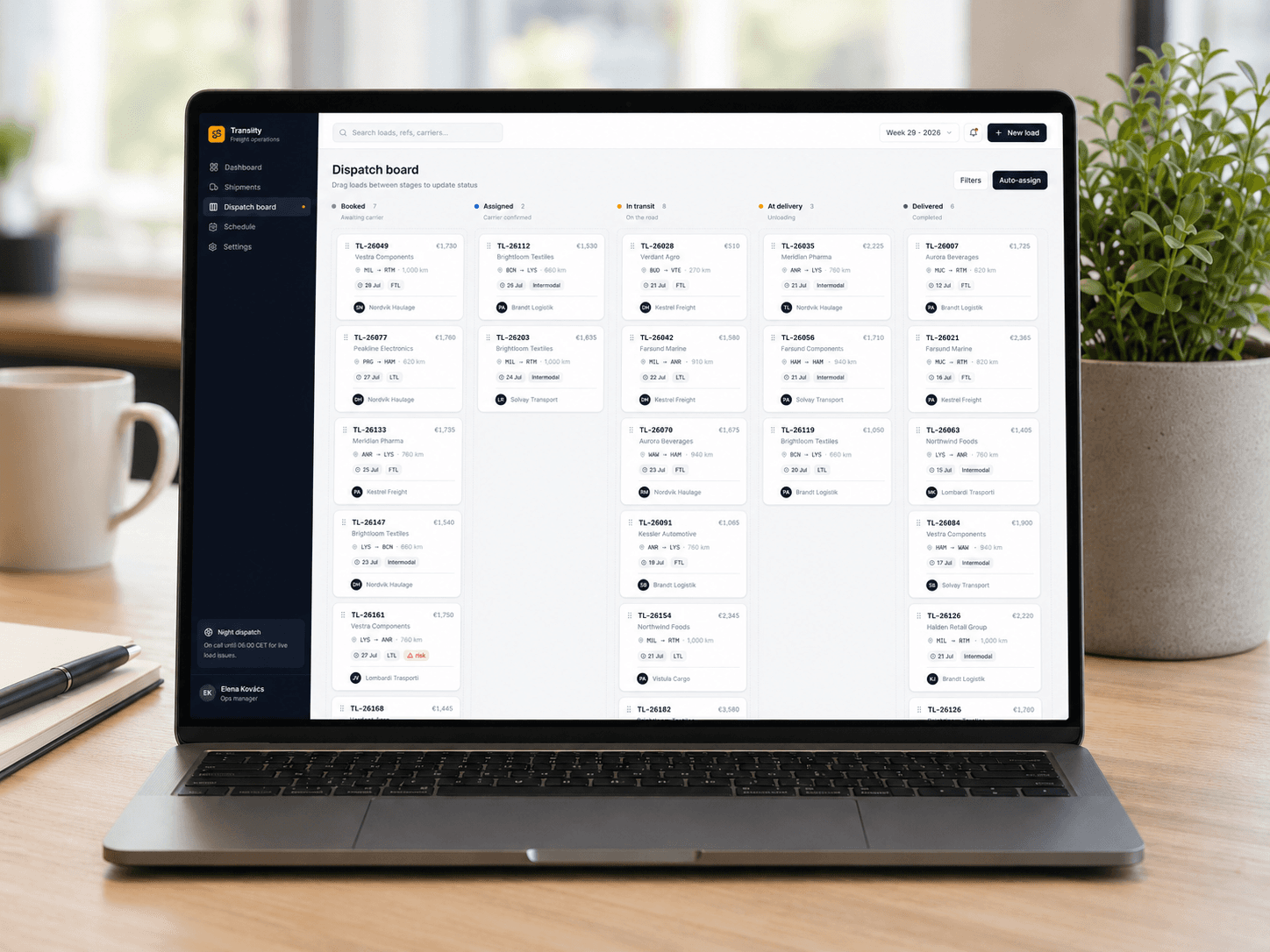
Dispatch board
Every load, at every stage, on one screen — reassigned with a drag instead of a phone call.
Driver scheduling
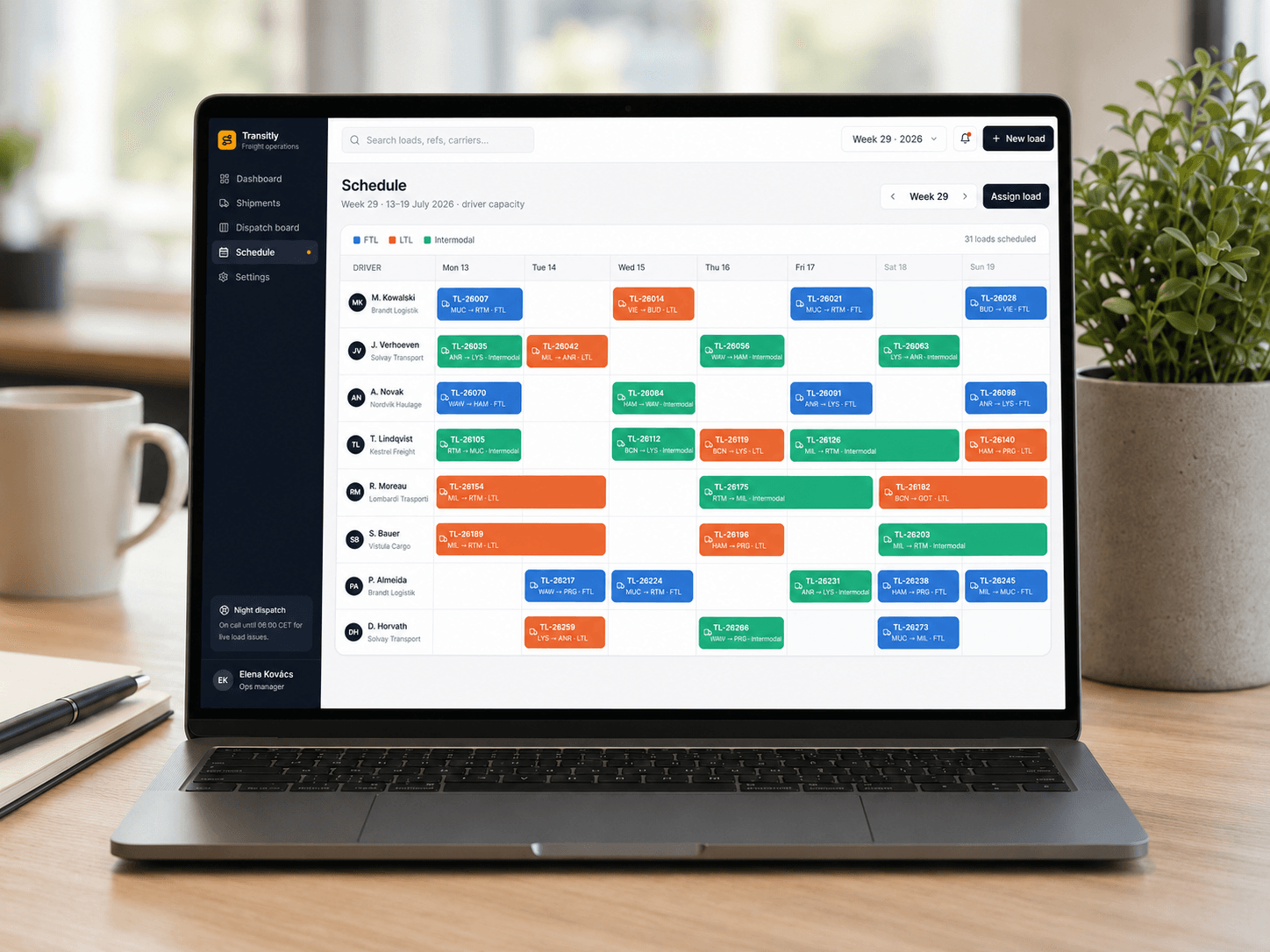
A full week of every driver's capacity at a glance, multi-day runs included. No more double-booking.
Live tracking
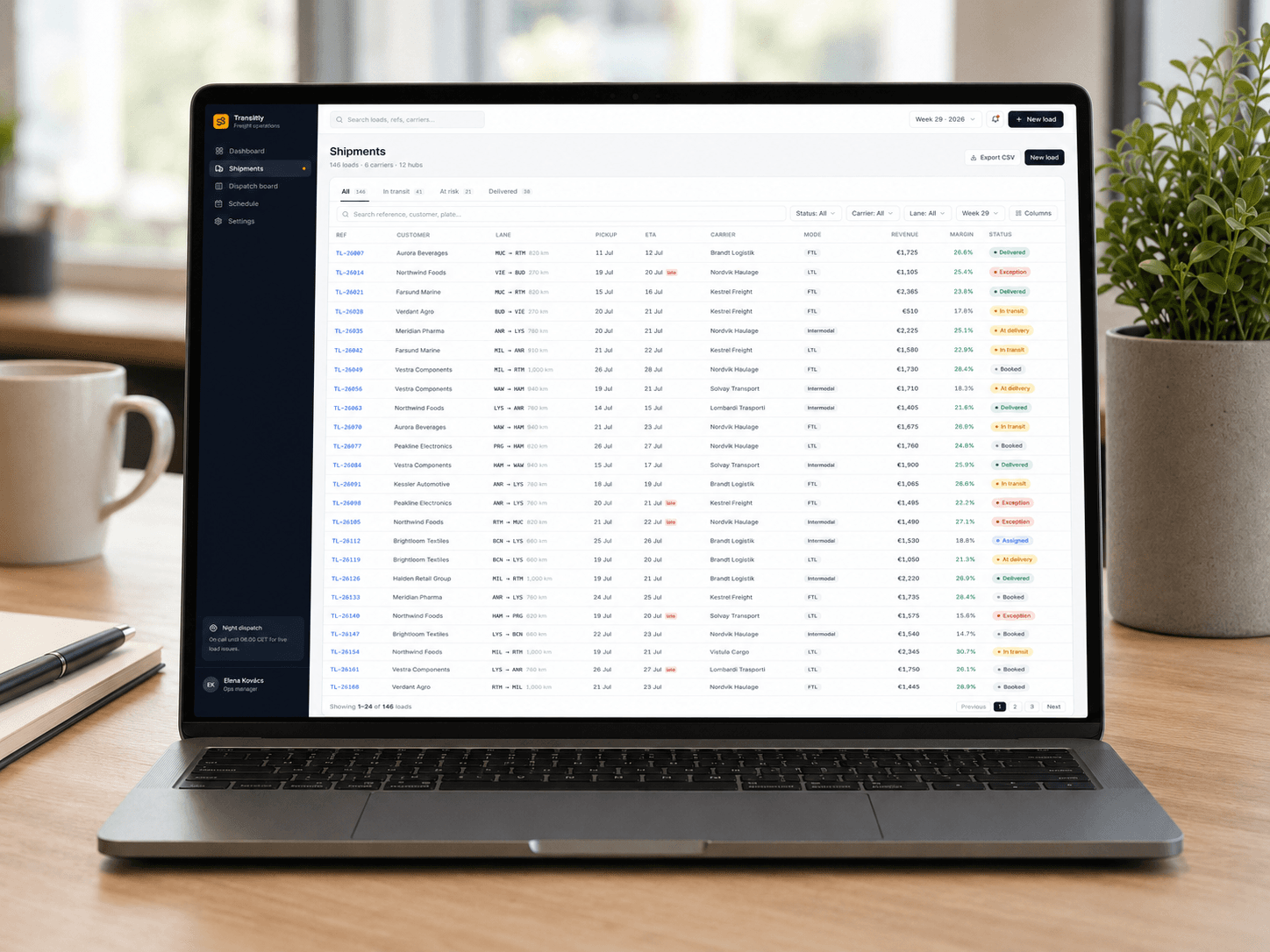
Progress and arrival time for every load — without phoning the driver to ask where the truck is.
Problems that announce themselves
The moment something goes wrong, it lands in a dispatcher's queue — with everything needed to fix it.
Margin on every load
Profit visible at the moment of assignment, not a month later in accounting.
Six months from first call to the full operation running on the platform. About one load in twenty still needs a person to step in — usually where a carrier's own tracking is unreliable — and everything else runs on its own. We continue to work with the team as the operation grows.
A forwarder running eight countries planned every load in spreadsheets and chased problems by phone — and was missing the 95% on-time promise its customers held it to. We built one operations platform: a live dispatch board, driver scheduling, real-time tracking and an exception queue. On-time delivery went from 87% to 96%, and the business absorbed 64% more volume without adding a single dispatcher.
Get in touch to discover how our expertise can turn your vision into a market leader.
Book a callHELLO@OCTY.DEV
Launch. Grow. Succeed.